
Your questions, our answers.
Do you have questions about giving blood? Below, we answer the most common ones.
Does giving blood hurt?
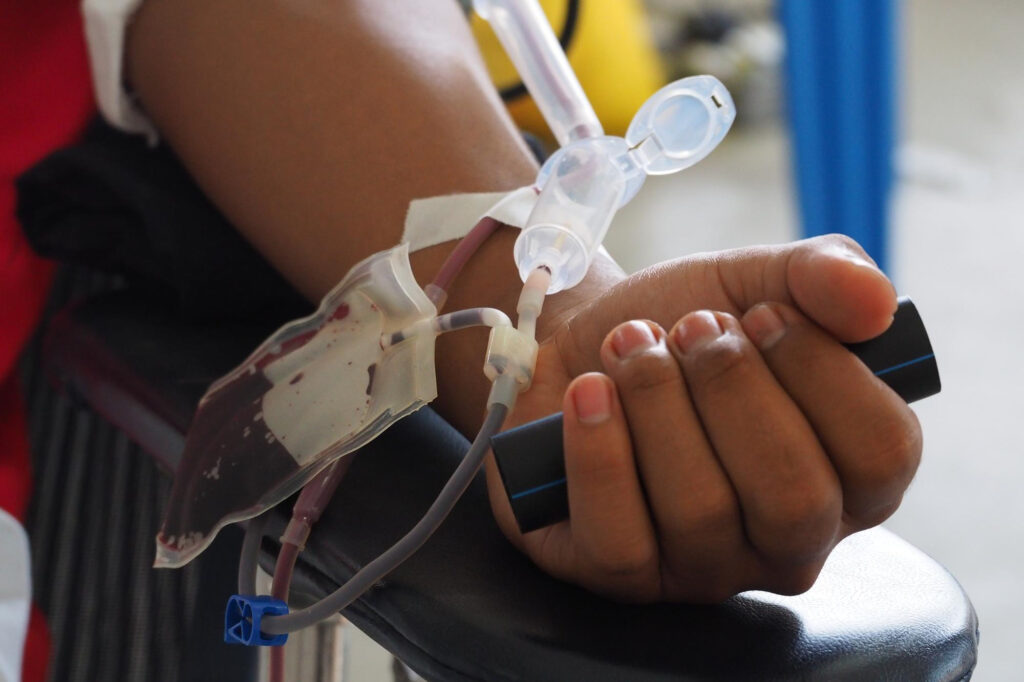
No. The needle prick is similar to that of an ordinary blood test: a slight sensation at the moment of insertion, which fades immediately. The PNST team is trained to ensure your comfort at every step.
How long does a blood donation take?
About one hour, from the moment you arrive to the moment you leave. The collection itself takes 8 to 10 minutes. The remaining time is dedicated to registration, the medical interview, and a recovery snack.
Is blood donation tiring?
For a healthy person, donation generally causes no noticeable discomfort. Your body naturally replenishes the collected blood volume within a few hours. It is simply advisable to avoid strenuous physical activity for 24 hours after donating.
Do I need to fast before donating blood?
No, quite the opposite. It is recommended to have a light meal and stay well hydrated before you come. Avoid heavy, fatty foods and alcohol the day before and the day of your donation.
How much blood will be collected?
Approximately 450 ml of blood — less than 10% of your total blood volume. Your body naturally restores this amount within a few hours.
How often can I donate blood?
Men may donate up to 4 times per year, with a minimum interval of 12 weeks between donations. Women may donate up to 3 times per year, with a minimum interval of 16 weeks.
Can I donate if I have high blood pressure or diabetes?
It depends on your specific situation and current treatment. If in doubt, come to a center: the PNST physician will assess your eligibility during the confidential medical interview. Do not rule yourself out before being evaluated.
Is there a risk of contracting a disease by donating blood?
None whatsoever. All equipment used is sterile and single-use. Donating blood carries no risk of contamination for the donor.
Can I donate if I am on medication?
Some medications may temporarily delay or prevent donation. Please disclose any ongoing treatment during your medical interview. The PNST team will advise you accordingly.
Can my donation be refused?
Yes, in certain situations. This is never a judgment — it is a protective measure for both you and the recipient. A deferral is often temporary. The medical team will explain the reasons and let you know when you may return.
Will the recipient know my identity?
No. Blood donation is strictly anonymous. The recipient does not know the donor’s identity, and vice versa. This is a fundamental principle of transfusion safety.
What happens to my blood after donation?
Your blood is tested and processed by the PNST laboratories. It is then separated into several components: red blood cells, platelets, and plasma. Each component can be used for a different patient. A single donation can therefore benefit multiple people.
Need help?
Our team is available to answer all your questions about blood donation in Haiti.